Loading... Forever: Lessons in Emotional Advertising from the Alzheimer’s Buffering Faces Campaign
The Swedish Alzheimer's Foundation (Alzheimerfonden) “Buffering Faces” campaign launched in July, 2025. Immediately it started making advertising professionals around the world stop scrolling and start talking. It transforms a simple, common digital frustration into a heartbreaking metaphor for memory loss. And it's reminding us about the power of emotional storytelling.
Alzheimer’s and dementia affect millions of families worldwide, with the numbers only rising. Yet, conveying the emotional reality of this disease is a unique challenge for marketers: how do you make the invisible pain of memory loss visible, relatable, and actionable?
This campaign perfectly captures the helplessness that comes with watching someone you love fade away, one forgotten face at a time.

The Campaign That's Bringing New Emphasis to Cause Marketing
Developed by Stockholm agency Kid Collective, the campaign quickly captured attention across Sweden and beyond. Ocean Outdoor donated digital billboards throughout Sweden and initiated the spread across social media, national TV, and the internet.
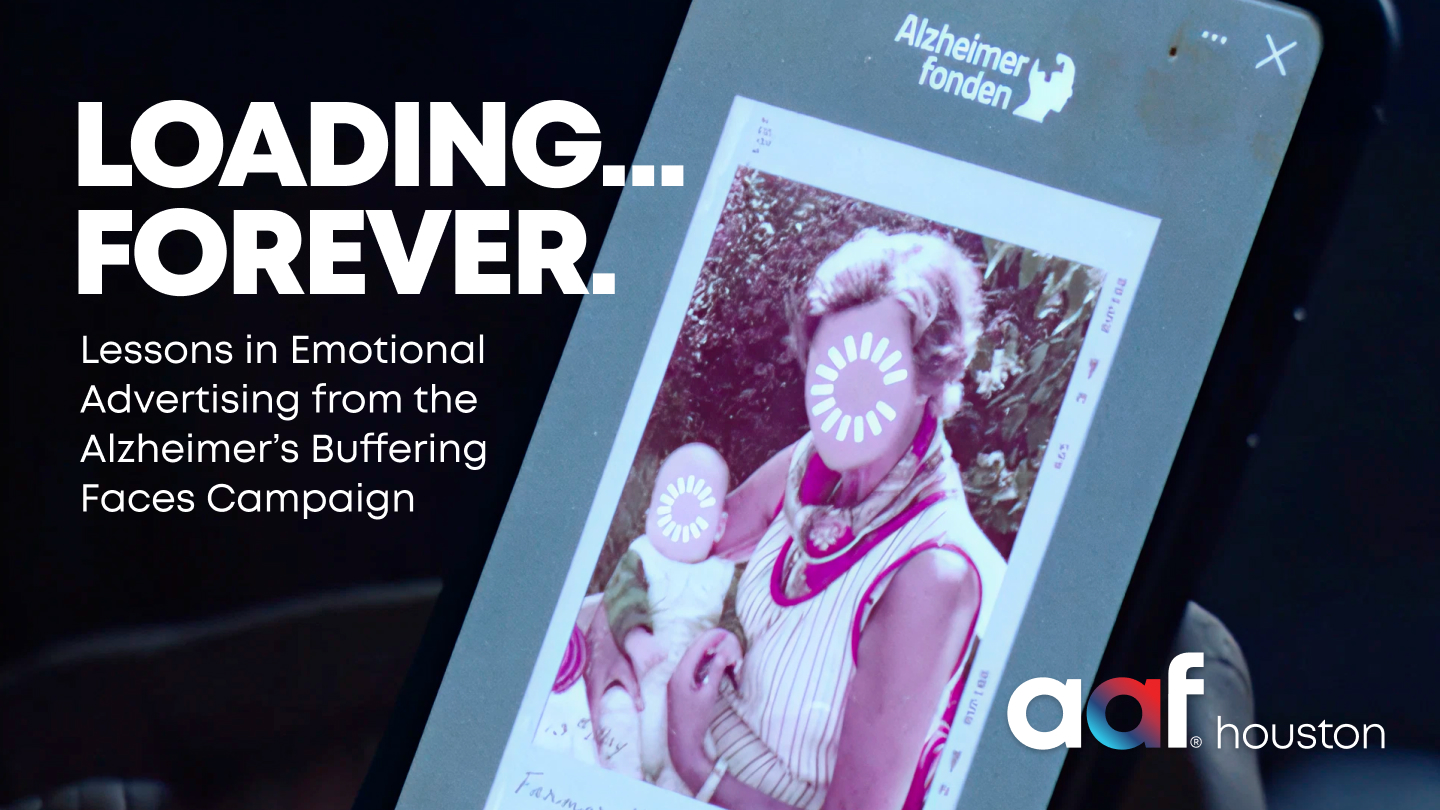
The concept is deceptively simple: old family photos where faces appear to "buffer" or glitch, with a spinning wheel icon—the spinning wheel we all know from waiting for a slow-loading image or video.
What a perfect visual representation of the confusion and fading memories that define Alzheimer's disease. A metaphor for the heartbreak of memory loss and the frustration felt by those living with Alzheimer’s and their families.
The campaign’s video is intentionally silent, heightening the sense of disorientation and frustration, mirroring the experience of dementia. It carries urgent messaging like "Help more people remember the faces they never want to forget." But it's the execution that makes this campaign extraordinary.
“We wanted people to feel a hint of the frustration that Alzheimer’s brings—for both those affected and their families. The spinning wheel became the perfect metaphor: it reflects the confusion of the disease and the irritation we all feel when images won’t load.” - Christian Jörgensen & Ulf Paulsrud-Sirbäck, Creatives at Kid Collective
Insights from the Creatives Behind the Campaign
The campaign was born not from a client brief, but from a deeply personal and professional connection to Alzheimer’s.

Ulf Paulsrud-Sirbäck shared, “One of us has a lot of Alzheimer's in the family, which makes this project amazingly important and honorable to execute. We really hope that we can help Liselotte and Alzheimerfonden in Sweden to raise new funds and broaden awareness.”
Christian Jörgensen added, “I have also experienced dementia and Alzheimer’s up close. Since my grandmother had Alzheimer’s and many other relatives had or have dementia, we are so happy to use our creative skills to raise awareness about this terrible disease.”
How It Happened
Ulf also described the ideation process: “We were having a conversation about how annoying it can be when a picture is buffering as you scroll through old photos on your phone. Then Christian showed me a picture of his family before it had finished loading. In that moment, we both realized that a loading image is a powerful metaphor for Alzheimer’s—especially if the loading symbol is placed over the faces of the people in the photo.
We quickly created a few mockups, and there it was. We showed them to colleagues who loved the idea. Christian reached out to Liselotte, and a week later we pitched it. They loved it immediately, and from there we began the hunt for collaborators to help us with donated media. Ocean Outdoor supported us with over 1,000 OOH screens across Sweden. It’s been a long journey, but we’re incredibly proud and excited that people seem to truly connect with the campaign.”
When asked if they were already working with the client, Ulf said, “We didn’t have a collaboration. We contacted them proactively! Hopefully we can do more campaigns together in the future.”
Why the Digital Metaphor Works So Well
Imagine that feeling never goes away. Imagine faces—the most important faces in your life—permanently stuck in loading mode.

Universal Metaphor
The genius of this campaign lies in its universal metaphor. Everyone recognizes that spinning wheel of digital frustration. We've all experienced the annoyance of waiting for content to load, wondering if our connection has failed us. This metaphor requires no translation, making the campaign accessible and emotionally resonant worldwide.
Emotional Resonance
The visuals are striking and unsettling, making the effects of Alzheimer’s tangible and memorable. Viewers don’t just learn about memory loss—they feel it. The campaign evokes empathy by putting audiences in the shoes of those with dementia, using a metaphor they encounter daily.
Simplicity and Clarity
The message is immediately clear. There’s no need for lengthy explanation or statistics—the creative does the heavy lifting. This simplicity fuels high shareability on social and digital platforms, as people instinctively understand and want to share the campaign’s message.
Multi-Channel Impact
Strategic placement across digital billboards, social media, and television maximizes reach and engagement. The campaign’s integration with relevant media—such as airing alongside a documentary about Alzheimer’s—further amplifies its emotional connection and urgency.
The Global Response and Industry Impact
The campaign has been widely praised by marketing professionals and the public for its creativity, emotional depth, and effectiveness. Social media commentary highlights how the campaign's metaphor makes the invisible pain of Alzheimer's visible and relatable, while also showcasing its power to evoke empathy and spark conversation.

Industry publications have called it a masterclass in emotional advertising, noting how it successfully translates complex medical realities into universally understood experiences. The campaign has gained particular traction on LinkedIn, where advertising professionals are sharing it as an example of cause marketing done right.
“We need more people to understand what Alzheimer’s does—not just to individuals, but to entire families. Through powerful, emotional communication, we hope to raise both awareness and much-needed funding for research.” - Liselotte Jansson, Secretary General, Alzheimerfonden
The Power of Creative Communication in Healthcare
This campaign represents the best of what advertising can achieve when applied to serious health issues. It demonstrates how creative communication can drive empathy and inspire action, not just awareness.
For Houston's advertising community, this campaign offers a blueprint for humanizing difficult topics. Whether we're working on public health campaigns, nonprofit messaging, or any cause marketing, the principles remain the same: find the universal human experience, make it emotionally accessible, and execute with strategic precision.

The campaign also highlights the unique role that advertising professionals play in society. We have the skills to take complex, often overwhelming issues and make them understandable and actionable.
This is both a privilege and a responsibility.
What Houston Advertisers Can Learn
Remember that technology alone isn’t always the answer. The most impactful campaigns bridge the gap between modern frustrations and timeless human struggles.

Leverage Familiar Symbols for Complex Messages
The campaign's success demonstrates how widely recognized symbols can make complex issues accessible. The buffering icon is universally understood, transcending cultural and linguistic barriers. Houston's diverse population could benefit from similar approaches that find common ground in shared experiences.
Emotional Storytelling Drives Action
Powerful visuals and simple concepts that evoke empathy are more likely to drive meaningful engagement than information-heavy approaches. The campaign proves that making people feel rather than just informing them creates lasting impact.
Cross-Platform Integration Amplifies Impact
Strategic placement across multiple channels—digital billboards, social media, and television—maximizes reach while ensuring consistent messaging. The key is ensuring each platform serves the campaign's emotional goals rather than just checking distribution boxes.
Purposeful Simplicity Wins
Clear, instantly understandable ideas are more likely to be shared and remembered. The campaign's genius lies in its restraint—it doesn't try to explain everything about Alzheimer's. Instead, it focuses on one powerful metaphor that captures the essence of the experience.
An Anecdote, or Soliloquy: Personal Reality Behind the Creative
As AAF Houston's Communications director, and the owner/operator of a content marketing firm, it’s my job to analyze why campaigns are effective. But this one hit me personally. My 63-year-old mother has undiagnosed dementia, and the challenges we face mirror exactly what this campaign captures.
Living states away, I've watched her condition deteriorate from a distance. She misses medical appointments because the disease prevents her from keeping them, making it impossible for her to get a diagnosis. Without a diagnosis, resources for helping her are extremely limited.
She's in complete denial—partly because she can't grasp the reality, and partly because both her parents died from dementia only a few years older than she is today.
The frustration is overwhelming. I use sophisticated digital tools daily in my marketing work, but no amount of technology can bridge the gap between understanding what's happening and being able to help.
Like those buffering faces, our connection feels permanently stuck in loading mode. Every conversation consists of repeating myself over, and over, and over, and over again.
This experience is shared by millions of families worldwide. According to the Alzheimer’s Association, over 7 million Americans are currently living with Alzheimer's disease, with that number expected to nearly double by 2050. Nearly 12 million Americans provide unpaid care for people with Alzheimer's or other dementias, often experiencing grief, guilt, anxiety, and helplessness.
The campaign captures my emotions perfectly. It makes the frustration tangible for people who haven't experienced it personally, while validating the feelings of those who have.
Put Pen to Paper, and Take Action
The campaign also reminds us that great advertising can contribute to meaningful social change. When we help people understand and empathize with experiences different from their own, we're building a more connected and compassionate community.
Creative campaigns like this demonstrate that advertising at its best doesn't just sell products—it builds understanding, drives empathy, and inspires action. In a world where technology can't solve every problem, human connection and understanding become even more valuable.
The faces may be buffering, but the message is crystal clear: sometimes the most powerful campaigns are the ones that make us feel rather than think, that connect us rather than inform us, and that remind us of our shared humanity in the face of life's greatest challenges.
About Rebecca Burley

Rebecca Burley is the owner and operator of Purple Page Marketing, where she specializes in helping solopreneurs, startups, and small businesses get their marketing off the ground with smart, efficient strategies. With an MBA and a background as a marketing-department-of-one, Rebecca is known for her practical, no-nonsense approach—always focused on maximizing results, stretching resources, and building authentic connections.
She’s passionate about making marketing accessible and effective, blending hands-on experience with the latest insights from LinkedIn’s algorithm and AI tools. Rebecca’s clients appreciate her resourcefulness, transparency, and genuine partnership—she’s the kind of marketer who’s in your corner, helping you grow every step of the way.
Outside of work, Rebecca enjoys time with her family, historical fiction, and a good cup of coffee. She brings creativity, warmth, and a knack for making complex marketing feel approachable and doable for everyone.


